


The Afternoon That Started It All
Some afternoons feel ordinary until you look back and realize they weren’t.
I was sitting on a friend’s patio reading while he worked nearby. At some point, I paused and started listening to an interview about innovation and society. The sound caught his attention.
He looked up and asked me:
“Are you into tech?”
“Of course,” I said. “I’ve always been curious.”
It was a simple answer to a deeper truth.
I studied philosophy at university. I had spent years thinking about society, power, and the invisible systems that shape how we live. I was used to questioning things, to looking beneath the surface.
And yet, there was one thing I had never seriously questioned:
Money.
My friend nodded.
“Then I’m going to invite you to a group I’m part of. I think you’ll like it.”
I said yes without thinking too much about it. I trusted him. And I could tell this mattered to him.
At the time, Bitcoin was something I had heard about, but never really explored.
That was about to change.
Entering a Different World
A few days later, we met at a café with a small group. Someone began explaining Bitcoin.
Decentralization.
Freedom.
Sovereignty.
Concepts I recognized, but had never seen applied in such a concrete way.
Then one idea stood out:
You are responsible for your money.
I didn’t fully understand it yet. But I felt the weight of it.
The following week, the group I met at the café was attending a Bitcoin event so I decided to go.
Inside, the atmosphere was vibrant and welcoming. Groups of people were gathered everywhere in conversation, animated by the same energy.
Everyone seemed to be building something.
The passion in the room was contagious.
I remember thinking:
Who are these people?
And where exactly have I landed?
The event was PlebLab Startup Day in Mexico City, presented by Yopaki, focused on Bitcoin builders and early-stage projects.
That evening ended with dinner, mariachi music, and a room full of people celebrating projects I only partially understood.
The next day, I spent time with some people from the previous night. We walked through the city, got coffee, and eventually sat down to eat.
The conversation kept returning to the same place.
What people were building.
What wasn’t working.
What they were trying next.
There was no sense of competition. No need to protect ideas.
Just curiosity, and a willingness to share.
That was when something became clear:
This was not just another event.
It was a different way of relating to work.
Are you taking advantage of all of Bitvocation’s career resources?
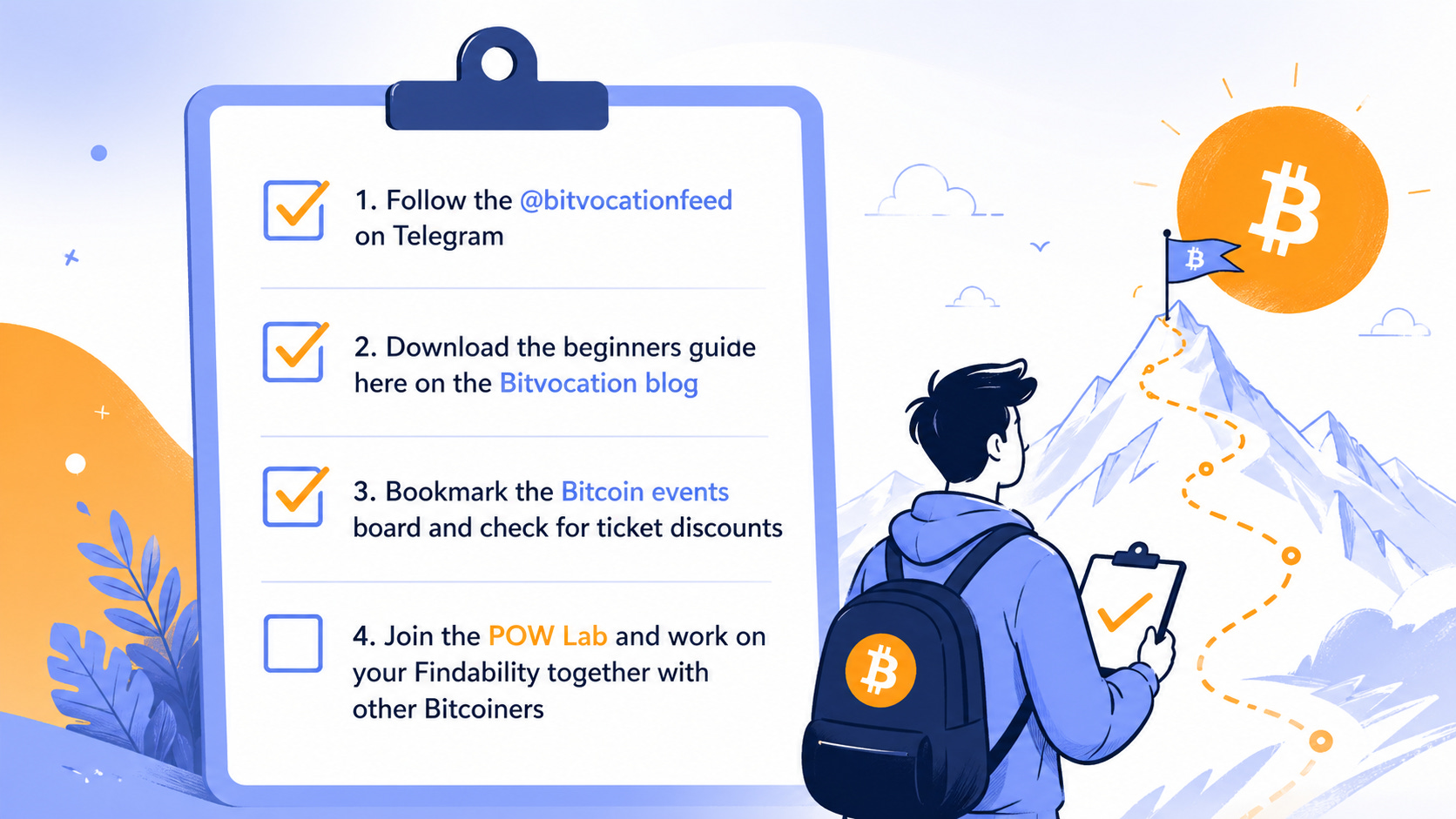
We’ve compiled a list of all our free and inexpensive resources here. Make use of them, share them, and if you want company and guidance while building your Bitcoin career - join us in the POW Lab!
Falling Down the Rabbit Hole
After that event I started going regularly to the local Bitcoin group my friend had introduced me to. We met every week, and once a month we had BitDevs sessions.
I read the Bitcoin whitepaper. Then The Bitcoin Standard. I listened to podcasts and followed projects.
But more importantly, I started asking a question I had somehow avoided for years:
What is money?
It surprised me.
I had spent years studying systems, questioning structures, analyzing power. But I had never examined the one system that quietly influences all the others.
Once I started, I couldn’t stop.
I began to see how money shapes incentives, and how those incentives shape behavior.
And slowly, things started to make sense in a new way.
A few months later, our local community organized the first Bitcoin-only hackathon in Mexico.
When teams were forming, I was hesitant, I didn’t know how I would fit. But then someone said something that stayed with me:
“Your background doesn’t matter. It has value”
During the hackathon, my team and I created Aprendiz de Satoshi, a Spanish-language RPG-style game designed to teach Bitcoin concepts across Latin America.
We ended up winning one of the prizes.
But more important than that, I understood something fundamental:
Bitcoin doesn’t just need developers.
It needs people.
The Breaking Point
At the time, I was working in sales. It was good money, stable, predictable.
But the environment felt increasingly disconnected from what I was discovering.
Instead of collaboration, there was competition. Instead of solving problems, people focused on blame.
I kept asking myself:
If everyone wants to succeed, why does it feel like everyone is working against each other?
Eventually, I understood something simple:
The system shapes the behavior.
Bitcoin, on the other hand, seemed to operate differently.
People shared knowledge. They helped each other. They built in public.
The contrast became impossible to ignore.
Little by little, something shifted inside me.
What once felt normal began to feel misaligned.
What once felt stable began to feel limiting.
And what once felt uncertain, Bitcoin, began to feel like the place where I wanted to be.
So I made a decision.
I left my job.
No plan.
No certainty.
No guarantees.
Only a conviction:
I would rather face uncertainty in something I believe in than remain comfortable in something that no longer makes sense to me.
Finding My Role
At first, I didn’t know what my role would be.
I’m not a developer, and I never planned to become one.
But the more I participated, the more I understood something important:
Bitcoin needs more than code.
It needs people who connect, organize, communicate, and support builders.
I began to recognize my own strengths more clearly.
I enjoy understanding what people are building.
I enjoy connecting people.
I enjoy seeing how ideas fit together.
I think in systems, in patterns, in possibilities.
PlebLab
A few months later after quitting my job, while following the Bitvocation job feed, I came across an opportunity:
“Lead of Partnerships at PlebLab”
I already knew the name. I had experienced their work firsthand in Mexico City.
What they created there stayed with me.
A space where people build, share, and support each other.
That mattered.
I applied.
Exactly one year after attending my first Bitcoin meetup.
And one day, I received the message:
Welcome to PlebLab.
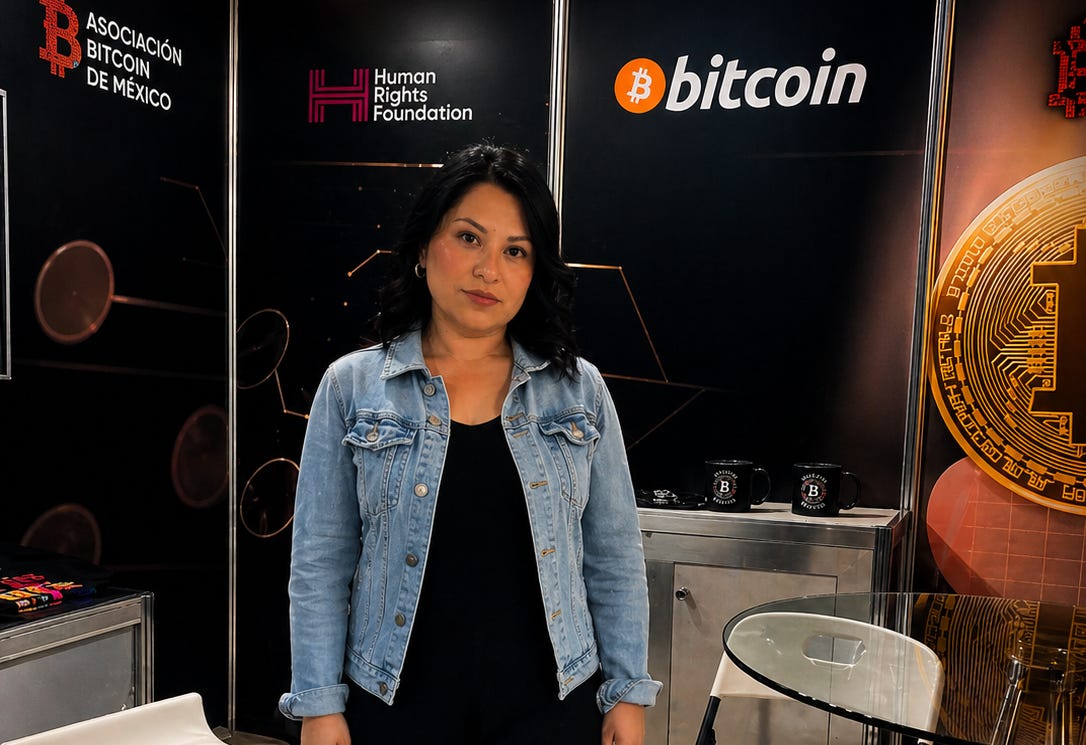
Today, I work in partnerships and sponsorships, helping connect builders, founders, and companies that want to support the Bitcoin ecosystem.
Much of my work is about building bridges.
Between people.
Between ideas.
Between what exists and what could exist.
What Bitcoin Changed
Bitcoin didn’t just change what I do.
It changed how I understand work.
It gave me a sense of ownership over my time and energy.
It connected me to a global community of people building something meaningful.
And it made me realize that ideas like sovereignty are not just theoretical.
They are something you practice.
For Anyone Who Thinks They Don’t Belong
If you’re reading this and thinking:
“I’m not technical. This isn’t for me.”
You’re wrong.
Bitcoin grows because people with different skills show up and contribute.
You don’t need permission.
You don’t need to have everything figured out.
You just need to start.
Author Bio
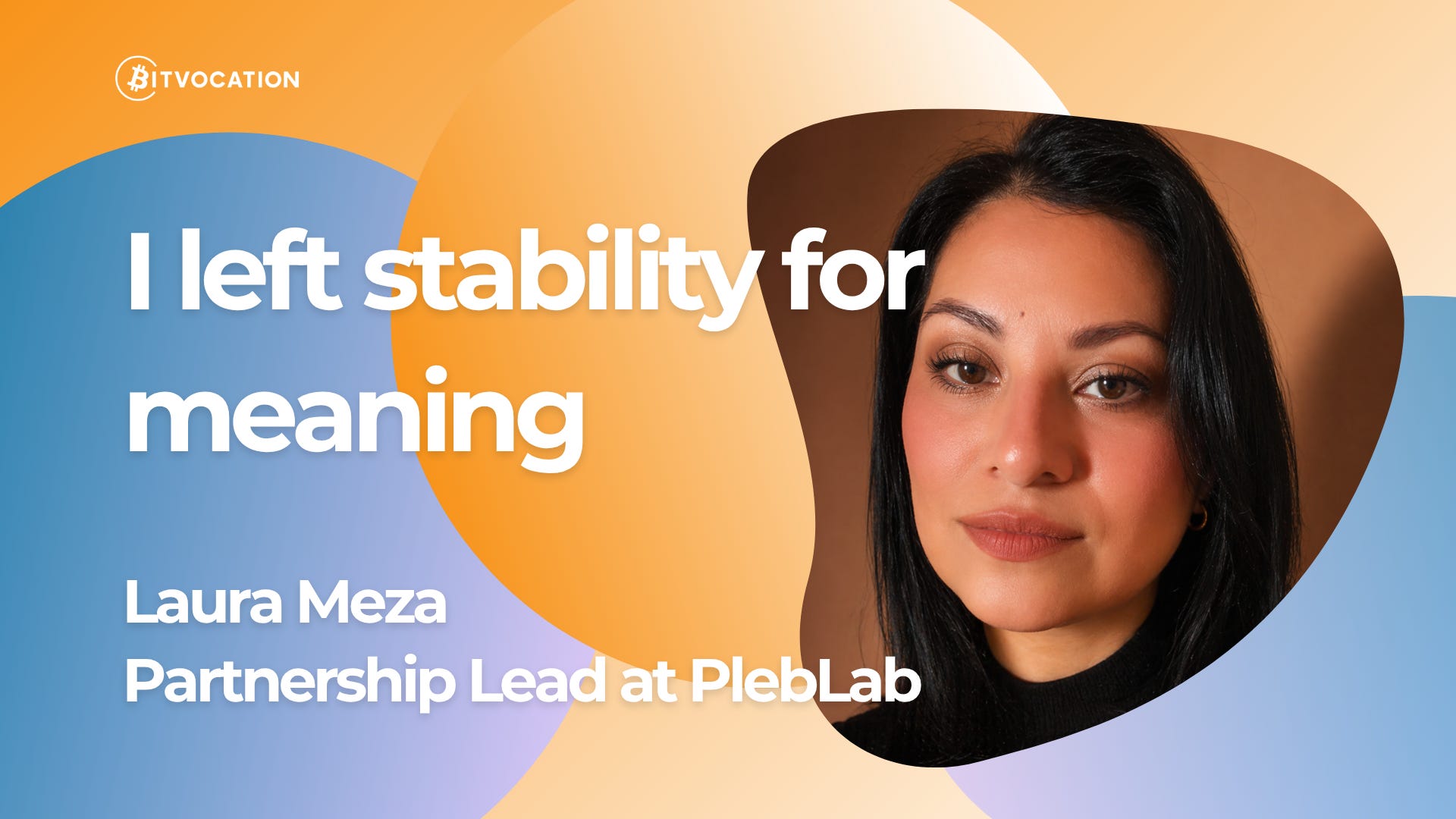
Laura Meza leads Partnerships and Sponsorships at PlebLab, a Bitcoin hackerspace and startup hub based in Austin. Her work focuses on connecting founders, builders, and companies that want to support the Bitcoin ecosystem. She is passionate about helping more people find their place in Bitcoin.